Introduction
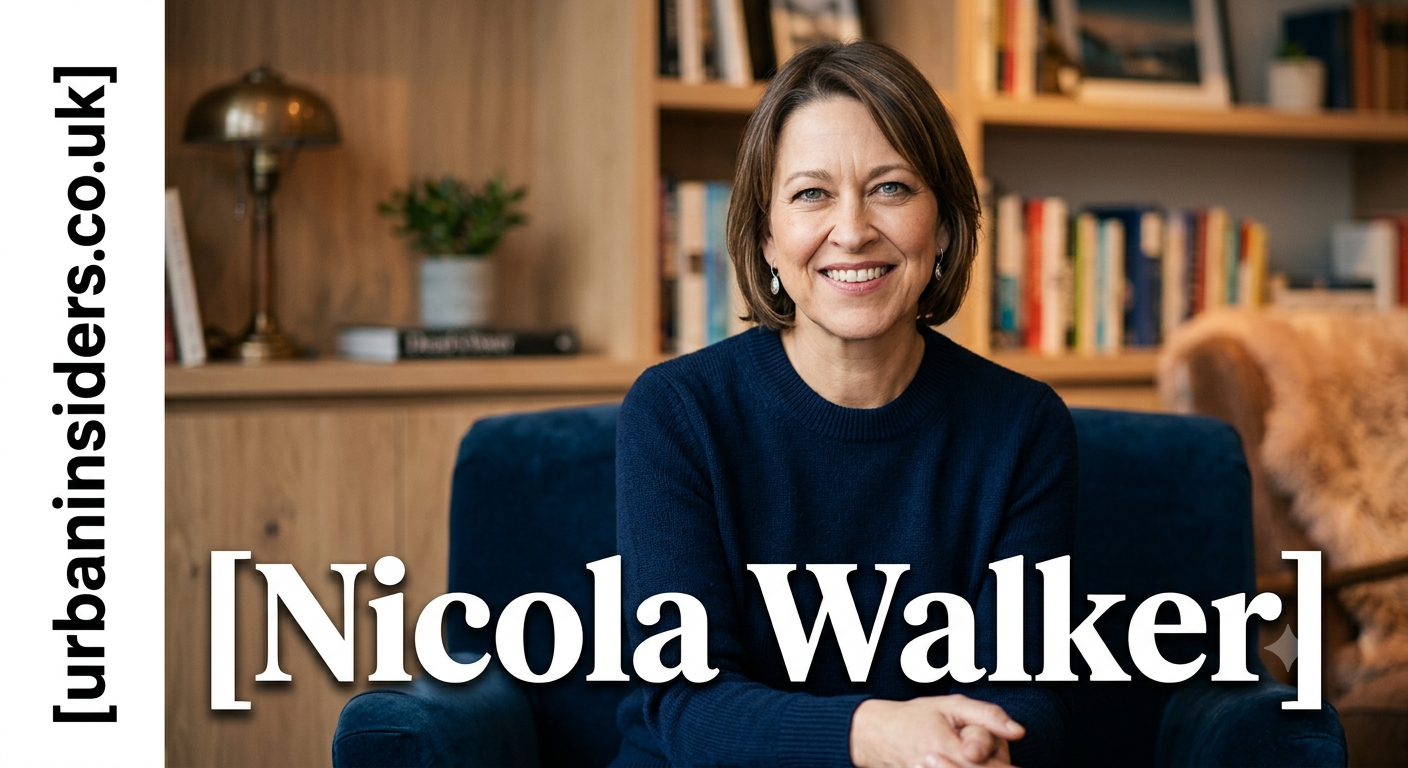
Ask a British TV viewer to name an actress who can make grief, restraint, and quiet intelligence feel like a full performance on their own, and Nicola Walker’s name comes up fast. She’s rarely the loudest person in a scene, but she’s often the reason you remember it.
Over three decades, Nicola Walker has built a career out of playing women who are competent, tired, funny, and complicated — sometimes all in the same episode. If you’ve watched British crime drama, courtroom drama, or even a sharp comedy in the last twenty years, there’s a good chance you’ve seen her without immediately placing the name.
This guide walks through who she is, what she’s known for, and why her work keeps landing so well with audiences and critics alike.
Who Is Nicola Walker?

Nicola Jane Walker was born on 15 May 1970 in Stepney, London. She studied at New Hall, Cambridge, where she became involved with the Cambridge Footlights — the same student comedy troupe that has launched a long list of British performers. Her circle there included future collaborators and friends such as writer Sarah Phelps and comedian Sue Perkins.
She’s spent her career moving between theatre, film, radio, and television, but it’s television where most audiences know her best. Her breakthrough came with roles in the 1990s, and she’s barely slowed down since — building a body of work that spans espionage thrillers, family courtroom dramas, and offbeat detective shows.
She’s married to actor Barnaby Kay, and the couple have a son, Harry, reportedly named after Harry Pearce — the character played by her Spooks co-star Peter Firth.
Read more: Is Clienage9 for PC Legit? What We Found After Checking
Why She Matters
Plenty of actors can deliver a big, dramatic monologue. Fewer can hold a scene using almost nothing — a pause, a half-smile, a flicker of exhaustion behind the eyes. That’s Nicola Walker’s signature. She tends to play women who are holding a lot together: police officers processing years of unsolved grief, a divorce lawyer navigating her own marriage falling apart, a friend whose loyalty is being tested by betrayal.
This isn’t an accident of typecasting. Directors and writers keep handing her these roles because she brings a lived-in honesty to them that’s hard to fake. Where a lesser performer might play grief as a single emotional note, Walker tends to let it sit alongside dry humour, professional focus, and everyday irritation — which is closer to how real people actually carry difficult things.
There’s a trade-off worth naming here too: because she’s so good at portraying loss and emotional weight, a lot of her most celebrated roles lean heavy. Viewers who want to see her range should also look at her comedic work, which tends to get less attention than the crime dramas.
Key Roles Worth Knowing
Ruth Evershed — Spooks (2003–2011) Her role as an MI5 intelligence officer in the BBC spy drama Spooks is where many British viewers first got to know her. Ruth was smart, restrained, and often the emotional centre of a show built around secrecy and betrayal.
DCI Cassie Stuart — Unforgotten (2015–2021) This is arguably her defining role. As a detective investigating cold cases, Walker anchored a series that treated old crimes — and the people affected by them — with unusual patience and respect. The show’s structure gave her space to build Cassie’s exhaustion and empathy over full seasons rather than single episodes.
Hannah Stern — The Split (2018–2024) In this BBC legal drama about a family of divorce lawyers, Walker played a woman untangling other people’s marriages while her own began to fall apart. It’s a good example of her range: sharp professional confidence paired with real personal vulnerability.
DI Annika Strandhed — Annika (2021–present) A departure in tone from her more sombre work, Annika is a police procedural where her character regularly breaks the fourth wall to talk directly to the audience. It’s quirkier and funnier than most of her back catalogue, and it’s picked up a loyal following on BBC iPlayer.
Alice — Alice and Steve (2026) Her most recent project is a six-part Disney+ comedy-drama opposite Jemaine Clement, in which two lifelong friends fall out after one starts dating the other’s adult daughter. It’s a sharper, more comedic turn than her crime-drama work, and an example of her continuing to seek out roles that don’t repeat what she’s already done.
She’s also known for earlier work including Last Tango in Halifax (which brought her a BAFTA nomination), Four Weddings and a Funeral, and Luther.
Common Misconceptions
“She’s only ever in gritty crime dramas.” It’s easy to think this if you’ve only seen Unforgotten or Spooks, but her filmography includes plenty of comedy and lighter drama — Annika and Alice and Steve being recent examples.
“She’s a newer face on TV.” Her career actually stretches back to the 1990s. She’s simply become more visible to wider audiences as streaming platforms have made older British TV shows easier to find.
“Awards define her career.” She’s won a Laurence Olivier Award and picked up BAFTA nominations, but plenty of her most-loved performances — Unforgotten is the clearest case — didn’t come with major award wins. Critical respect and audience loyalty don’t always show up on a trophy shelf.
What Makes Her Performances Work
If you’re trying to understand her appeal as a performer rather than just as a name on a cast list, a few things stand out:
- She underplays rather than overplays. Big emotional moments are often delivered quietly, which tends to make them land harder.
- She picks roles with internal conflict. Many of her best-known characters are dealing with a gap between what their job requires and what they’re personally going through.
- She works well in ensemble shows. Rather than dominating scenes, she tends to elevate the actors around her, which is part of why shows like Unforgotten and The Split work as ensemble pieces rather than star vehicles.
Where to Start Watching
If you’re new to her work, a reasonable starting point depends on what you’re after:
- Want a slow-burn character study? Start with Unforgotten.
- Want espionage and Cold War-style intrigue? Spooks is the classic entry point.
- Want something funnier and stranger? Annika or Alice and Steve are better fits.
- Want a family and workplace drama with sharp writing? The Split is worth the time.
Frequently Asked Questions
Is Nicola Walker still acting? Yes. As of 2026, she’s continuing to work across TV and theatre, with her Disney+ comedy-drama Alice and Steve among her most recent projects, alongside further seasons of Annika.
What is Nicola Walker best known for? Most audiences know her from Unforgotten, where she played DCI Cassie Stuart, and from Spooks, where she played MI5 officer Ruth Evershed.
Has Nicola Walker won any major awards? Yes. She won the 2013 Laurence Olivier Award for Best Actress in a Supporting Role for The Curious Incident of the Dog in the Night-Time, and she’s been nominated for a BAFTA TV Award for Last Tango in Halifax.
Does Nicola Walker only do drama? No. While she’s best known for dramatic roles, she’s taken on comedic work as well, including Annika, which mixes crime drama with humour, and her 2026 series Alice and Steve.
Where did Nicola Walker train as an actress? She studied at New Hall, Cambridge, where she was involved with the Cambridge Footlights rather than attending a traditional drama school.
Is Nicola Walker married? Yes, she’s married to actor Barnaby Kay, and the couple have one son together.
What is Nicola Walker’s most acclaimed role? Critical opinion varies, but Unforgotten is widely considered her defining performance, largely because of how the show let her build the character’s emotional weight across multiple seasons.
Final Thoughts
Nicola Walker’s career is a useful reminder that not every memorable performance needs to be loud. Her strongest work tends to live in the quieter moments — a look held a beat too long, a joke that doesn’t quite land because the character’s mind is elsewhere. That’s a harder thing to do well than it looks, and it’s a big part of why she keeps being cast in shows that ask their leads to carry real emotional weight.
Whether she’s investigating a decades-old murder, untangling a messy divorce, or navigating a friendship gone wrong in a Disney+ comedy, the throughline is the same: she plays people, not archetypes. That’s rarer on television than it should be.