Introduction
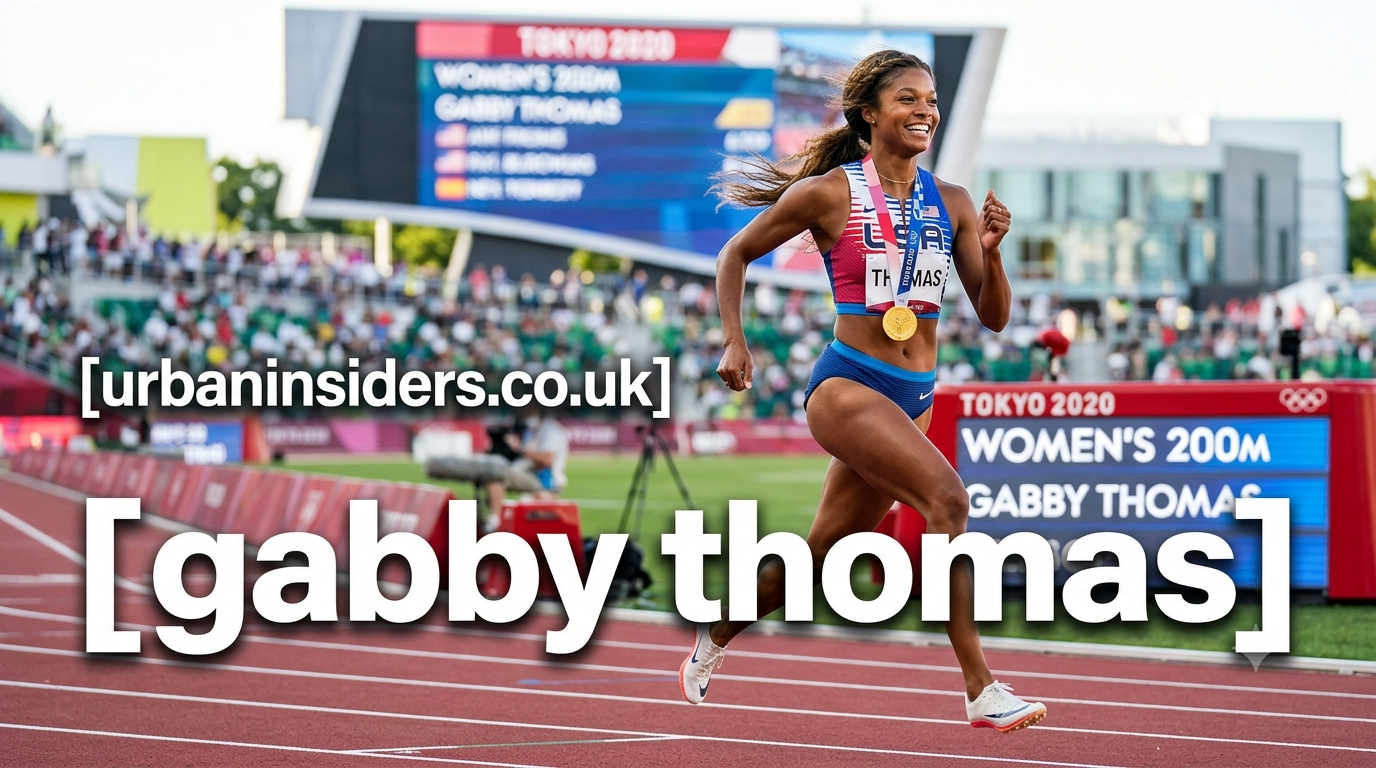
Watch Gabby Thomas run a 200m final and you’ll notice something most sprinters don’t have: a visible gear change in the final 50 meters, when everyone else is fading and she’s still accelerating. That closing speed is what separated her from the field at the Paris 2024 Olympics, where she won gold in the 200m and became the first American woman to take that title since Allyson Felix in 2012.
But there’s more to her story than a single race. Thomas is a Harvard graduate with a degree in neurobiology, a master’s in epidemiology, and a public voice on getting more young women of color into science careers. She’s also had to rebuild her career more than once after injuries that would have ended most people’s seasons. Understanding how she got here — and where she’s headed toward the 2028 Los Angeles Games — says a lot about what it actually takes to stay at the top of a brutally competitive sport.
Who Is Gabby Thomas?
Gabrielle “Gabby” Thomas is an American sprinter who specializes in the 200m, though she’s also a strong 100m and 400m runner. She won 200m gold at the Paris 2024 Olympics, added a bronze in the same event at Tokyo 2020, and has picked up relay medals along the way, including a 4x100m silver in Tokyo.
Her path to professional track wasn’t the typical one. Thomas ran at Harvard, where she won an NCAA title in the 200m in 2018, all while studying neurobiology and global health. After graduating in 2019, she went on to earn a master’s degree in epidemiology from the University of Texas Health Science Center in Houston. She’s talked openly about juggling grad school coursework with elite training, which is not a combination you see often in professional sports.
On the track, her personal best in the 200m sits at 21.60 seconds, run at the 2023 USATF Championships — making her the second-fastest woman in history over that distance. She’s also a three-time Diamond League champion in the 200m, with wins in 2018, 2019, and 2024.
Read more:Mike Gansey: From WVU Walk-On Grit to NBA Front Office Power Player
Why Her Career Matters
Thomas’s story matters for a few reasons that go beyond her medal count.
First, she’s proof that the “pick one lane” advice given to young athletes isn’t the only way forward. She built a legitimate academic career in the sciences at the same time she was becoming one of the fastest women alive. That combination has made her a natural advocate for STEM education, and she regularly speaks about encouraging young women, especially young women of color, to consider careers in research and public health.
Second, her comeback from injury shows what the sport actually looks like behind the medals. An Achilles injury that started in May 2025 and was initially treated as minor got progressively worse, eventually forcing her to withdraw from the 2025 World Championships. That’s a significant setback for anyone at her level. She spent roughly eight months working her way back before returning to competition in early 2026.
Third, 2026 has turned into an experimental year for her. With no Olympics or World Championships on the calendar, Thomas has used the season to test herself over longer distances, occasionally racing the 400m in addition to her usual 100m and 200m program — something she’s said she wants to explore now that the pressure of a global championship isn’t hanging over every race.
Key Highlights of Her Career
- Paris 2024 Olympic gold, 200m — the first American woman to win the event since 2012.
- Tokyo 2020 Olympic bronze, 200m, plus a silver medal in the 4x100m relay.
- Personal best of 21.60 seconds in the 200m, set at the 2023 USATF Championships, making her the second-fastest woman ever at that distance.
- Three Diamond League 200m titles — 2018, 2019, and 2024.
- 2018 NCAA champion in the 200m while competing for Harvard.
- Strong 2026 season form, including a 21.70 win at the Lone Star Grand Prix in June and a 21.83 victory in Budapest in July, both while working her way back from injury.
What Made Her Approach Work
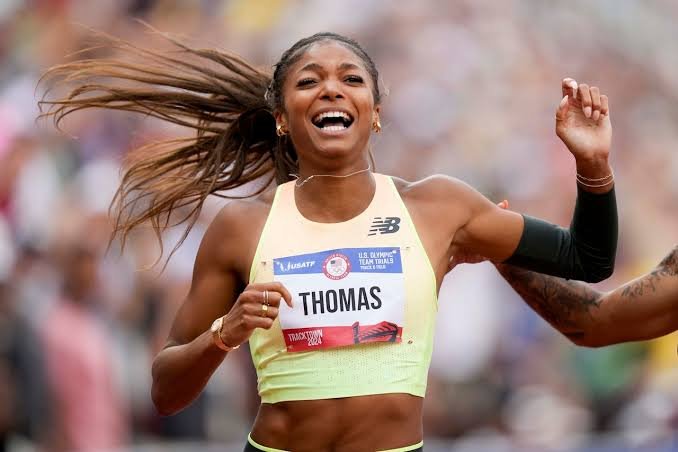
A few things stand out about how Thomas has managed her career, on and off the track.
She treats recovery as part of training, not a break from it. Rather than rushing back from the Achilles injury to chase a specific meet, she took the better part of a year to rebuild, prioritizing long-term health over a quick return. That patience is a big part of why she’s been running fast again in 2026.
She’s not afraid to experiment in a low-stakes year. With no Olympics or Worlds on the 2026 calendar, she’s used the season to test the 400m, a distance she’s dabbled in before but never made a priority. That kind of experimentation is much harder to justify in a year when a global title is on the line, so she’s using the calm season to gather information for the seasons that matter more.
She’s built a life outside the sport. Between the STEM advocacy work and a stated focus on spending more time with friends and family, Thomas has avoided letting her entire identity collapse into her race times. Athletes who manage this balance tend to have longer, more sustainable careers, since burnout and injury often follow when competition becomes the only thing that matters.
Common Misconceptions About Gabby Thomas
“She’s only a 200m specialist.” She’s actually raced competitively across the 100m, 200m, and 400m, and has posted times in the 400m (sub-49 seconds) that would be a career highlight for most sprinters who focus on that distance full time.
“Her academic career was just a side note.” Thomas completed a full neurobiology degree at Harvard and a master’s in epidemiology while training at an elite level — an unusually demanding academic path for a professional athlete, not a marketing angle.
“An off-year means she’s not competing seriously.” Skipping certain meets, including the 2026 USATF Outdoor Championships, isn’t a sign she’s stepped back from competing. Without an Olympics or Worlds on the calendar, athletes at her level often prioritize select high-value meets and training blocks over a full domestic schedule.
Expert Tips for Following Her Season
If you want to actually understand what you’re watching when Thomas races, a few things help:
- Watch the last 50 meters of the 200m, not just the start. Her finishing speed, not her reaction time out of the blocks, is what usually decides her races.
- Check the wind reading on fast times. A 21.70 with a slight tailwind reads differently than the same time run into a headwind — context matters when comparing performances across meets.
- Pay attention to which meets she skips. In a non-championship year, absences from certain national meets often reflect strategic planning around bigger goals like the Los Angeles 2028 Olympics, not a decline in form.
- Track her 400m appearances specifically. They’re a meaningful signal about how she and her coaching team are thinking about her range heading into future seasons.
Frequently Asked Questions
What is Gabby Thomas‘s personal best in the 200m? Her personal best is 21.60 seconds, set at the 2023 USATF Championships, which makes her the second-fastest woman in history over that distance.
Did Gabby Thomas win gold at the Paris 2024 Olympics? Yes. She won the women’s 200m final at the Paris 2024 Olympics, becoming the first American woman to win that event since 2012.
What injury did Gabby Thomas deal with before her 2026 season? She sustained an Achilles injury in May 2025 that gradually worsened, forcing her to withdraw from the 2025 World Championships. She returned to competition in April 2026 after an extended recovery.
Where did Gabby Thomas go to college? She attended Harvard University, graduating in 2019 with a degree in neurobiology and global health, and later earned a master’s degree in epidemiology from the University of Texas Health Science Center in Houston.
Is Gabby Thomas competing at the 400m now? She’s raced the 400m occasionally during the 2026 season, using the year without an Olympics or World Championships to explore the distance, though the 200m remains her primary event.
Why did Gabby Thomas skip the 2026 USATF Outdoor Championships? In a season without a global championship at stake, several top athletes, including Thomas, opted out of the national meet, likely to manage training loads and focus on select international competitions instead.
Final Thoughts
Gabby Thomas’s career is a useful reminder that elite performance rarely follows a straight line. She’s dealt with real setbacks, made unconventional choices about combining sport with a demanding academic path, and used a lower-pressure season to try things that a championship year wouldn’t allow. As she builds toward the Los Angeles 2028 Olympics, the pattern so far suggests she’ll keep making decisions based on long-term development rather than short-term headlines — which, if her track record is any indication, tends to work out for her.