
Andy Burnham has become one of the most recognizable figures in modern British politics. Best known as the Mayor of Greater Manchester, he has built a reputation for speaking out on regional inequality, public transport, housing, and health care. While many politicians remain closely associated with Westminster, Burnham has increasingly focused on local leadership, arguing that cities and regions should have greater control over their own future.
His political journey spans more than two decades, including senior roles in government and several high-profile leadership campaigns within the Labour Party. Along the way, he has earned both praise and criticism for his positions, but few would disagree that he has shaped conversations about devolution and regional power in England.
This guide explores who Andy Burnham is, how he entered politics, the policies that define his career, and why he continues to be an influential voice in British public life.
Who Is Andy Burnham?
Andy Burnham is a British Labour politician who has served as the Mayor of Greater Manchester since 2017. Before taking on the mayoral role, he represented Leigh as a Member of Parliament from 2001 until 2017 and held several cabinet positions during Labour governments.
Born on 7 January 1970 in Aintree, Merseyside, Burnham studied English at the University of Cambridge before working as a researcher and political adviser. His early experiences in government gave him a close understanding of public policy long before he entered Parliament.
Throughout his career, Burnham has often emphasized fairness, stronger public services, and giving communities outside London a greater voice. These themes have remained consistent despite changing political circumstances.
Read more:Andrew Giuliani: Biography, Career, Politics, Golf, and Public Life
Early Life and Education
Burnham grew up in the North West of England, an area that would later shape much of his political outlook. His upbringing exposed him to the social and economic challenges experienced by many working communities during the 1980s.
After attending local schools, he studied English at Fitzwilliam College, Cambridge. Rather than pursuing journalism or academia, he moved into politics, working as a special adviser for senior Labour politicians.
These early roles provided valuable insight into government decision-making and policy development. They also helped establish the political networks that supported his future parliamentary career.
Andy Burnham’s Parliamntary Career
Andy Burnham entered Parliament after winning the Leigh constituency in the 2001 general election. During his years as an MP, he steadily climbed through government positions.
He served in several ministerial roles before joining the Cabinet. Among his most notable appointments were:
- Chief Secretary to the Treasury
- Secretary of State for Culture, Media and Sport
- Secretary of State for Health
As Health Secretary between 2009 and 2010, Burnham focused on protecting National Health Service (NHS) services during a period of economic uncertainty. His support for publicly funded healthcare has remained one of the defining aspects of his political identity.
Following Labour’s defeat in the 2010 general election, Burnham became a senior opposition figure and twice sought the leadership of the Labour Party. Although unsuccessful, these campaigns raised his national profile.
Becoming Mayor of Greater Manchester
In 2017, Andy Burnham left Parliament to stand as the first directly elected Mayor of Greater Manchester. His victory marked a significant turning point in his career.
The newly created mayoral office carried responsibility for transport, policing, housing, economic development, and aspects of health and social care across Greater Manchester.
Burnham argued that local leaders understand regional priorities better than central government. He has consistently advocated for stronger devolution, believing that cities should have greater control over funding and public services.
His comfortable re-election in 2021 demonstrated continued public support for his approach to regional leadership.
Key Policies and Priorities
Several issues have defined Andy Burnham’s work as mayor.
Public Transport
Perhaps his most widely recognized achievement has been the reform of Greater Manchester’s bus network. Burnham supported bringing buses under greater public control through franchising, aiming to create a more coordinated system similar to London’s.
The wider “Bee Network” seeks to integrate buses, trams, cycling, and walking routes into a single transport system.
Housing
Affordable housing has remained another major priority. Burnham has encouraged brownfield development while promoting housing standards intended to improve living conditions across the region.
Homelessness
Soon after becoming mayor, he launched initiatives aimed at reducing rough sleeping. While homelessness remains a complex challenge, his administration has worked alongside charities, councils, and housing providers to expand support services.
Health and Social Care
Drawing on his previous experience as Health Secretary, Burnham has continued to support closer integration between health and social care services. He has frequently argued that prevention and community-based care should receive greater attention.
Andy Burnham During the COVID-19 Pandemic
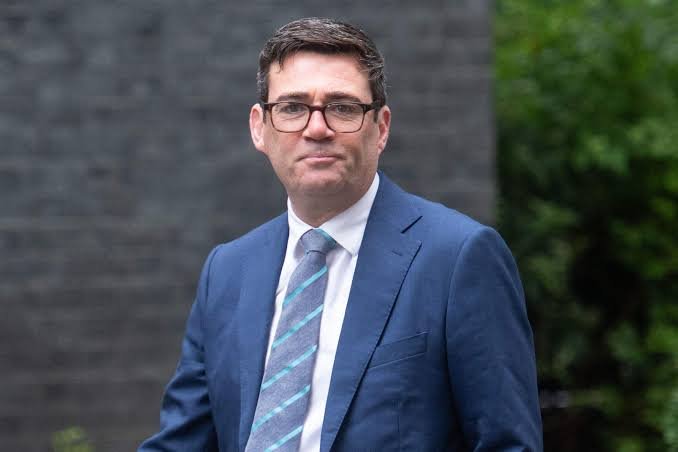
Burnham attracted nationwide attention during the COVID-19 pandemic, particularly in late 2020.
He publicly challenged the UK Government over financial support for Greater Manchester during regional lockdown negotiations. Burnham argued that workers and businesses facing restrictions required stronger economic assistance.
The dispute received extensive media coverage and helped establish him as one of the most prominent regional leaders in England. Supporters praised his willingness to defend local communities, while critics questioned parts of his approach. Regardless of political opinion, the episode significantly increased his national profile.
Leadership Style and Public Image
Andy Burnham is often described as a consensus builder who prefers practical solutions over ideological arguments. His communication style tends to focus on local issues that directly affect residents, including transport costs, housing, policing, and public services.
Supporters see him as someone who gives northern England a stronger voice within national politics. His emphasis on devolution reflects a belief that decision-making should move closer to local communities.
Critics, however, argue that some ambitious projects require substantial funding and may take years to deliver measurable results. Like many public figures, Burnham’s record continues to generate debate across political lines.
Achievements and Challenges
Several achievements stand out during Burnham’s public career.
His leadership has helped place Greater Manchester at the centre of discussions about regional government in England. Transport reforms, investment in active travel, and efforts to tackle homelessness have become defining parts of his mayoralty.
At the same time, significant challenges remain. Rising living costs, pressure on public services, housing shortages, and economic inequalities continue to affect Greater Manchester. Delivering meaningful improvements often depends on funding decisions made by central government, limiting what any regional mayor can achieve independently.
These realities illustrate both the opportunities and limitations of devolved government.
Andy Burnham’s Influence on British Politics
Although his role is regional rather than national, Andy Burnham continues to influence political debates across the UK.
His advocacy for English devolution has encouraged wider discussions about giving cities greater control over transport, planning, housing, and economic development. Other regional leaders have adopted similar arguments, reflecting a broader shift toward locally driven policymaking.
Burnham is also frequently mentioned in conversations about Labour’s future, although he has repeatedly emphasized his commitment to Greater Manchester. Whether or not he returns to national politics, his ideas about regional governance are likely to remain influential.
Final Thoughts
Andy Burnham has built an unusual political career by moving from senior government minister to one of England’s most prominent regional leaders. His focus on public transport, affordable housing, health care, and devolution has shaped the direction of Greater Manchester while contributing to national conversations about how power should be shared across the UK.
His record is not without criticism, and many of his long-term goals remain works in progress. Even so, his willingness to champion regional interests has made him one of the country’s most closely watched politicians. For anyone seeking to understand the changing relationship between local and national government in Britain, Andy Burnham remains an important figure to follow
Frequently Asked Questions
1. Who is Andy Burnham?
Andy Burnham is a British Labour politician serving as the Mayor of Greater Manchester since 2017. He previously served as an MP and Cabinet minister.
2. What political party does Andy Burnham belong to?
He is a member of the Labour Party.
3. When did Andy Burnham become Mayor of Greater Manchester?
He was first elected in May 2017 and was re-elected in 2021.
4. What is Andy Burnham best known for?
He is widely known for promoting transport reform, regional devolution, affordable housing initiatives, and defending Greater Manchester’s interests during the COVID-19 pandemic.
5. Was Andy Burnham Health Secretary?
Yes. He served as the UK’s Secretary of State for Health from 2009 to 2010.
6. Has Andy Burnham run for Labour leader?
Yes. He stood in the Labour leadership elections in 2010 and 2015 but was not elected.
7. What is the Bee Network?
The Bee Network is Greater Manchester’s integrated public transport system, bringing together buses, trams, cycling, and walking under a coordinated network.