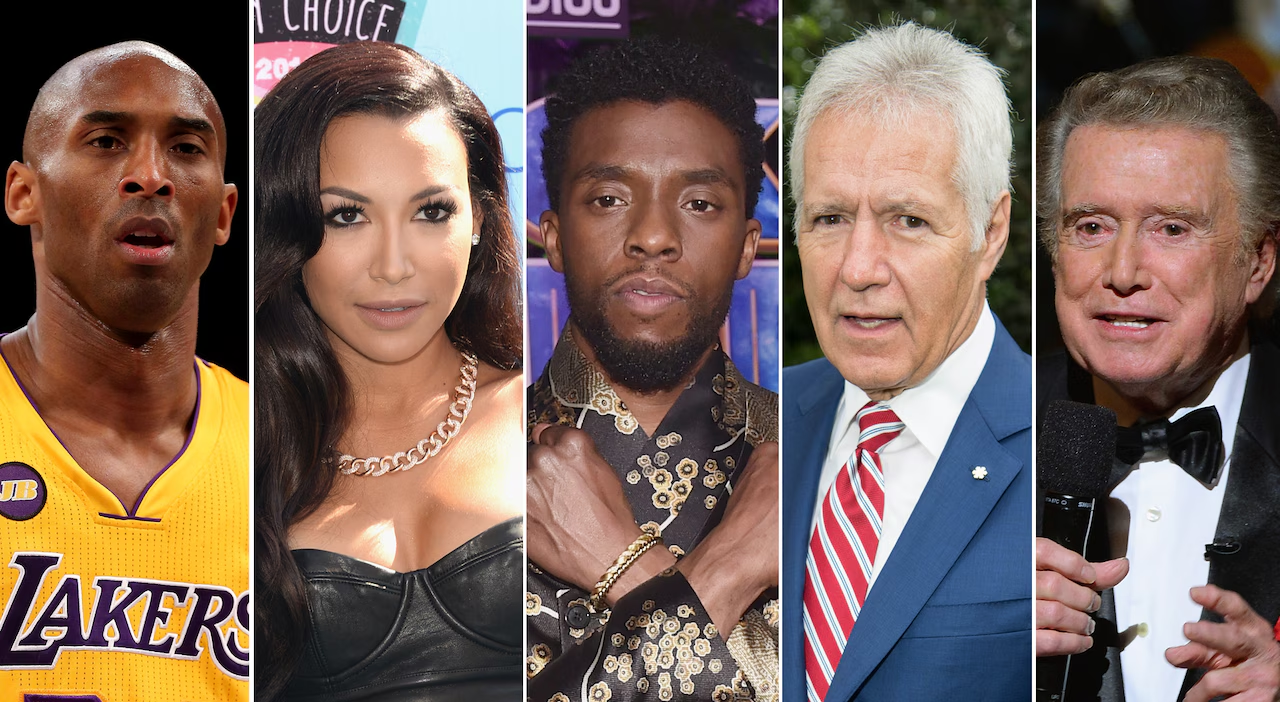
You saw the headline. Your stomach dropped. Now you’re typing “celebrity news death” into Google, trying to figure out if it’s real.
You’re not alone. Every year, dozens of false celebrity death stories spread across social media before anyone checks the facts. Some come from bad sources. Others come from old hoaxes recycled with a new name. This guide shows you exactly how to verify a celebrity news death report in minutes, so you never share false information or panic over a story that isn’t true.
Why Celebrity News Death Stories Spread So Fast
A death rumor about a public figure spreads faster than almost any other type of news. Part of the reason is emotional: people care about the stars they grew up watching, and strong emotions make people share first and check later.

The other reason is structural. Social platforms reward fast reactions, not accurate ones. A single post with a shocking claim can rack up thousands of shares before a fact-checker or news outlet even sees it.
The Role of Social Media
Fake news accounts and prank websites often copy the look of real news sites. They use similar logos, similar fonts, and urgent headlines. Once a screenshot of that fake headline gets shared, it spreads through group chats, comment sections, and reposts, disconnected from the original source. By the time it reaches you, there’s no way to tell where it started.
Old Hoaxes That Keep Coming Back
Celebrity death hoaxes aren’t new. The idea goes back over a century. Mark Twain once had to publicly joke that news of his death had been greatly exaggerated, after a newspaper mistakenly reported he had died. In 1969, a rumor claimed Paul McCartney had died and been secretly replaced, a story so persistent that fans still discuss it decades later.
Today’s version is faster but works the same way: someone starts a rumor, it gets repeated, and it takes on a life of its own before anyone confirms whether it’s true.
How to Verify a Celebrity News Death Report
Before you believe or share a celebrity news death story, run through this quick checklist.
- Check two or three major outlets. If a death is real, established news organizations will report it within a short window of each other.
- Look for an official statement. A family member, publicist, agent, or verified representative usually confirms real news through a statement or press release.
- Check the celebrity’s own social accounts. If their team is active and posting normally after the rumor started, that’s a strong sign the story is false.
- Search the celebrity’s name plus “hoax.” If it’s a repeated rumor, older articles debunking it will usually show up.
- Look at the source’s other headlines. Sites built for fake news often have a pattern of shocking, unverified claims across many different celebrities.
- Wait before sharing. Give it an hour. Real breaking news gets picked up quickly by multiple credible outlets; hoaxes tend to fade or get corrected.
Trusted Sources vs. Red Flags
| Signal | Likely Trustworthy | Likely a Hoax |
|---|---|---|
| Source | Established news outlet with an editorial team | Unknown site, heavy ads, no author listed |
| Confirmation | Official statement from family, agent, or publicist | Only a screenshot or forwarded message |
| Coverage | Multiple major outlets reporting similarly | Only one obscure site or social post |
| Timing | Story holds up and gets more detail over time | Story disappears or gets quietly deleted |
| Tone | Calm, factual reporting | All caps, excessive punctuation, clickbait phrasing |
Common Mistakes People Make With Death News
Even careful readers fall into a few predictable traps:
- Trusting a screenshot over the original source. Screenshots are easy to fake and impossible to verify on their own.
- Assuming a trending hashtag means it’s confirmed. Trending only means many people are talking about it, not that it’s true.
- Sharing first, checking later. Once you share something false, the correction rarely reaches the same audience.
- Confusing satire with real reporting. Some sites publish fake celebrity news as parody, and it gets taken out of context.
- Ignoring the date. Old articles about past hoaxes or unrelated events sometimes resurface and get mistaken for breaking news.
What to Do if You Already Shared False Information
If you already posted or forwarded a celebrity news death story that turned out to be false, it’s easy to fix:
- Delete or edit the original post as soon as you confirm it’s false.
- Post a short follow-up letting people know the story was incorrect.
- Share a link to a credible source with the accurate information.
- Avoid re-sharing similar unverified stories from the same source in the future.
Frequently Asked Questions
How do I know if a celebrity news death story is real?
Check two or three major news outlets and look for an official statement from a family member, agent, or publicist. If only one obscure site is reporting it, treat it as unconfirmed.
Why do celebrity death hoaxes happen so often?
They spread because shocking headlines get shared quickly, before anyone verifies them. Fake news sites also design headlines to look like real reporting.
What’s the fastest way to check a celebrity death rumor?
Search the celebrity’s name along with the word “hoax,” and check whether their official social media accounts are still active and posting normally.
Are celebrity death hoaxes illegal?
Rules vary by platform and location. Many social platforms remove confirmed hoax content that causes harm, but laws around false statements differ from country to country.
Why do fake celebrity death stories reappear years later?
Old hoaxes get reposted, sometimes by accident and sometimes on purpose, because they still generate clicks and shares even after being debunked.
Should I trust a celebrity death story from social media alone?
No. Treat social media posts as a starting point, not a confirmation. Verify with an established news outlet before believing or sharing it.
What should I do if I can’t find any official confirmation?
Wait. If a death is real, credible outlets and official statements typically appear within hours. No confirmation after a day or two is a strong sign the story is false.
Do fake celebrity death stories ever come from real news sites?
Rarely, and usually due to an editorial mistake rather than intent. Reputable outlets correct these errors quickly and publicly.
How can I avoid falling for a celebrity death hoax in the future?
Bookmark two or three trusted news sources, and make it a habit to check them before reacting to any shocking celebrity headline.
What is the best single sign that a celebrity news death report is fake?
No official statement from the celebrity’s team, combined with silence from major news outlets, is the clearest sign the story hasn’t been confirmed.
Conclusion
A shocking headline about a celebrity news death can feel urgent, but urgency isn’t the same as accuracy. Slow down, check two or three trusted sources, and look for an official statement before you believe or share the story. Most hoaxes fall apart within an hour once you know what to look for.
Your Next Step
Urban Insiders checks every celebrity story against verified sources before it gets published, so you can read entertainment news without wondering what’s actually true. Bookmark Urban Insiders and check back before you share the next shocking headline, we’ll already have the real story confirmed.